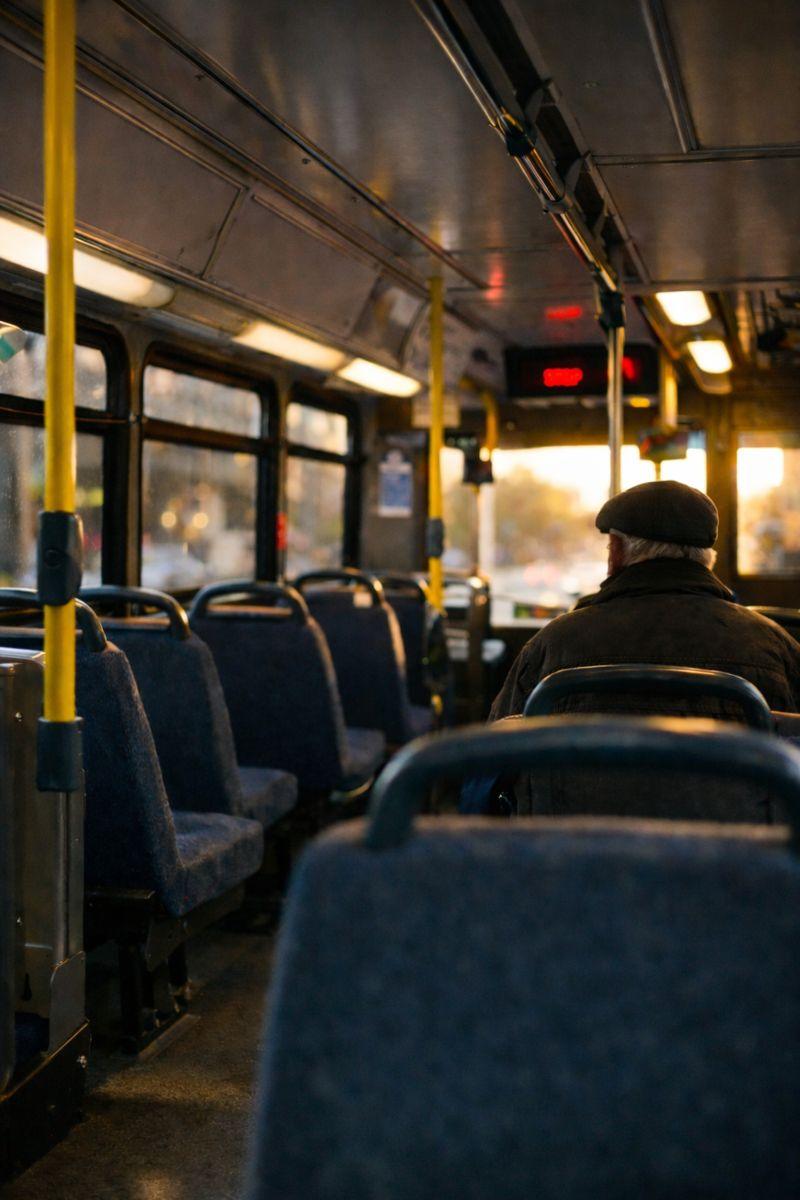
There is an elderly man I have met a few times on the bus.
You notice him first by the lines on his face, deep and settled, the kind that suggest life has not always been kind. Not cruel exactly, but heavy. The sort of heaviness that comes from staying long enough to see things fall apart and learning, slowly and without applause, how to carry on anyway.
Every day, whether it is raining or bright outside, he takes the bus to the central library. Always the same one. He has a favourite spot there, a particular chair that seems to have learned the shape of him over time. He sits, opens a book, and reads.
He brings a packed lunch with him, most often a Biscoff or peanut butter sandwich. On days when he is feeling indulgent, he adds a thin layer of strawberry jam, carefully placed, Biscoff or peanut butter first, then jam. He told me it makes the sandwich feel like an event, something small but worth looking forward to.
He reads for hours. Occasionally he looks up, not to stare, but to notice. People moving, voices passing, life continuing around him. At four o’clock, almost instinctively, he closes his book, gathers his things, and makes his way out to catch the 4:15 bus home.
That bus matters to him. The one after it is usually full, noisy, uncomfortable. He made the mistake of getting on it once and had to stand the entire journey. He remembers that day clearly and has not repeated it since.
When he gets home, he showers and waits for his daughter to return from work. She cooks dinner every evening, always trying to make it different, warm, and thoughtful. He tells her she does not need to bother, that something simple would do, but she never listens.
He used to be a successful man, at least successful in his own eyes. He managed a newspaper factory once, took pride in the rhythm of work and the sense of purpose it gave him. Then there was an accident. He lost the function of his right hand. Some of it returned with time and effort, but it never fully recovered and never will. He was given a modest severance package, and shortly after that, his wife died of cancer. It was sudden and unexpected, especially because she had been healthy, or so everyone believed.
Her death changed everything.
He fell into a quiet depression, the kind that does not announce itself loudly. The kind where tears are replaced by questions that circle endlessly. Why am I still here. Why did she have to go. Why did I not go with her.
He never had children of his own. The daughter he speaks of now, Abbie, was his wife’s child from an earlier marriage. They only truly came to know each other after his wife died. At first, they were strangers bound by shared grief and uncertainty.
But Abbie tried. She made the effort to stay, to talk, to soften the distance between them.
“She is my angel,” he told me. “My everything.”
When Abbie went through a difficult time with an abusive boyfriend, he told her to leave and come stay with him. Since then, she has become his closest companion, his best friend, the person who gives shape to his days. He says this without drama, only gratitude.
Recently, Abbie told him she has met someone new. He is meeting him this Sunday. He says he prays this man will be kinder and gentler than the last. He says she deserves everything good that life can offer.
Then he looks at me, almost apologetically, and says that he knows he might look sad, maybe even homeless to some people, but that his heart is finally full.
He has learned to be grateful for small things. For being able to find his way home. For catching the right bus. For sitting in a library with a book and time to read. He tells me that he did not always see these things as privileges, but he does now.
And he really is happy and content with his life.
Lovely piece