When we talk about cancer, we often talk about the disease itself and the fear it represents. We speak less about the people who quietly spend their entire lives trying to make that fear smaller.
This is the story of three such individuals whose lives and work have gently reshaped the way cancer is understood and treated.

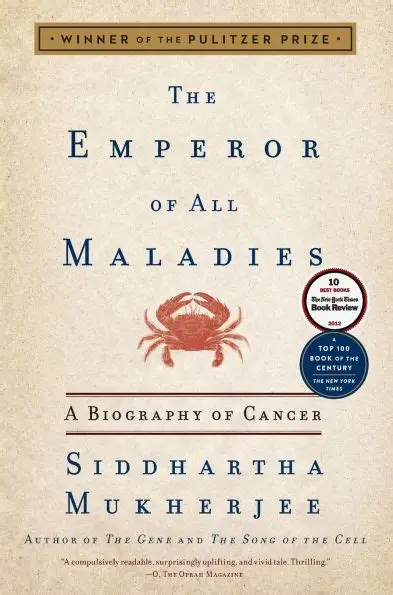
Siddhartha Mukherjee is a physician, cancer researcher, and writer born in New Delhi, India. He trained in medicine and oncology in the United States and works as a clinician-scientist involved in cancer biology and treatment. Alongside his clinical and research work, he is widely known for writing The Emperor of All Maladies: A Biography of Cancer, a detailed historical account explaining how cancer has been studied, understood, and treated over time. The book presented complex medical history in clear language accessible to the public and contributed significantly to global awareness and understanding of cancer as a disease. Mukherjee has also conducted laboratory research in cancer genetics and blood cancers, contributing to scientific knowledge in oncology while helping communicate that knowledge beyond academic medicine.

Brian Druker is an American physician-scientist specializing in blood cancers. His most important contribution was leading the clinical development of imatinib, a targeted treatment for chronic myeloid leukemia. This medicine was designed to block a specific abnormal signal inside leukemia cells that causes them to grow uncontrollably. Before this treatment, chronic myeloid leukemia was frequently fatal within a few years. With imatinib therapy, many patients were able to achieve long-term survival and live with the disease as a manageable condition. This success demonstrated that cancer treatment could be designed to precisely target molecular changes within cancer cells, and it established the model for many later targeted cancer therapies used across oncology.

Tasuku Honjo is a Japanese immunologist whose research focused on how the immune system regulates its response to disease. He discovered a protein on immune cells called PD-1, which functions as a natural brake that reduces immune activity. Cancer cells can use this pathway to avoid being attacked by the immune system. Honjo’s discovery made it possible to develop drugs that block PD-1, allowing immune cells to recognize and destroy cancer cells more effectively. Treatments based on this principle, known as immune checkpoint inhibitors, are now widely used in cancers such as melanoma, lung cancer, and kidney cancer and have significantly improved survival for many patients. For this discovery, Honjo was awarded the Nobel Prize in Physiology or Medicine in 2018.
Together, the work of these three individuals represents major advances in cancer understanding, targeted treatment, and immunotherapy, each contributing to measurable improvements in patient survival and modern cancer care.