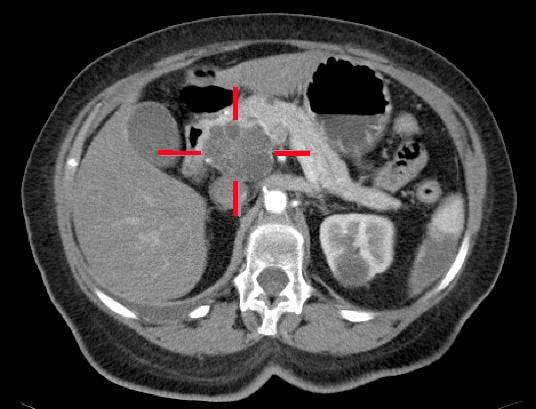
The Hepatobiliary unit is one place I always dreaded covering when I had to do HPB ward rounds.
Not because I didn’t want to learn, but because of what I saw there. Patients with pancreatic cancer stayed with me long after the ward round ended. Some had tubes everywhere. Some looked painfully thin. Many looked tired in a way that felt deeper than illness. And too often, there was very little hope of complete recovery or cure. Standing by their bedsides, you could feel how helpless the situation was, for them and for us as doctors. It broke my heart every single time.
That is why the news I saw recently about pancreatic cancer made me stop in my tracks. I actually exclaimed with joy. I did not expect that reaction, but my body responded before my mind did. After everything I had seen on those wards, this news felt different.
Researchers have found a new way to attack pancreatic cancer by using three drugs together instead of one. Pancreatic cancer is known for being clever and resistant. When one pathway is blocked, it often finds another way to survive. What this research showed is that by blocking several of these pathways at the same time, the cancer struggled to escape.
In laboratory studies and animal models, this triple drug treatment caused pancreatic tumours to shrink completely. In many cases, the tumours did not come back during the time the researchers followed them. For a cancer that is known for returning quickly and resisting treatment, this is incredibly encouraging.
Another important part of this discovery is that the treatment worked on aggressive cancers that usually respond very poorly to current therapies. It also appeared to spare healthy tissues more than traditional treatments, which matters because pancreatic cancer patients often endure very harsh side effects.
This research was led by scientists at the Spanish National Cancer Research Centre, and while it is still early and not yet ready for use in humans, it opens an important door. It shows that pancreatic cancer may not be as untouchable as we once feared.
Reading this felt like music to my ears.
For doctors, progress like this means we may one day have better tools, better conversations, and better outcomes to offer. For patients, it means something even bigger. It means hope where there has been very little for far too long.
I could not help but think of the patients I saw during those HPB ward rounds. The ones lying quietly, the families holding their hands, the feeling that we were doing what we could but wishing we could do more. I wish they could see this progress. I wish they could know that people around the world are still working tirelessly to change this story.
I am deeply grateful to the researchers behind this discovery. Their work represents persistence, courage, and belief in a future where pancreatic cancer does not carry the same weight of fear it does today.
I am eagerly waiting for that future. A future where cancer is no longer something we dread. A future where hope is not the exception but the norm.
For now, this news was enough to make me smile out loud. And that, after everything I have seen, means a lot.