Abstract
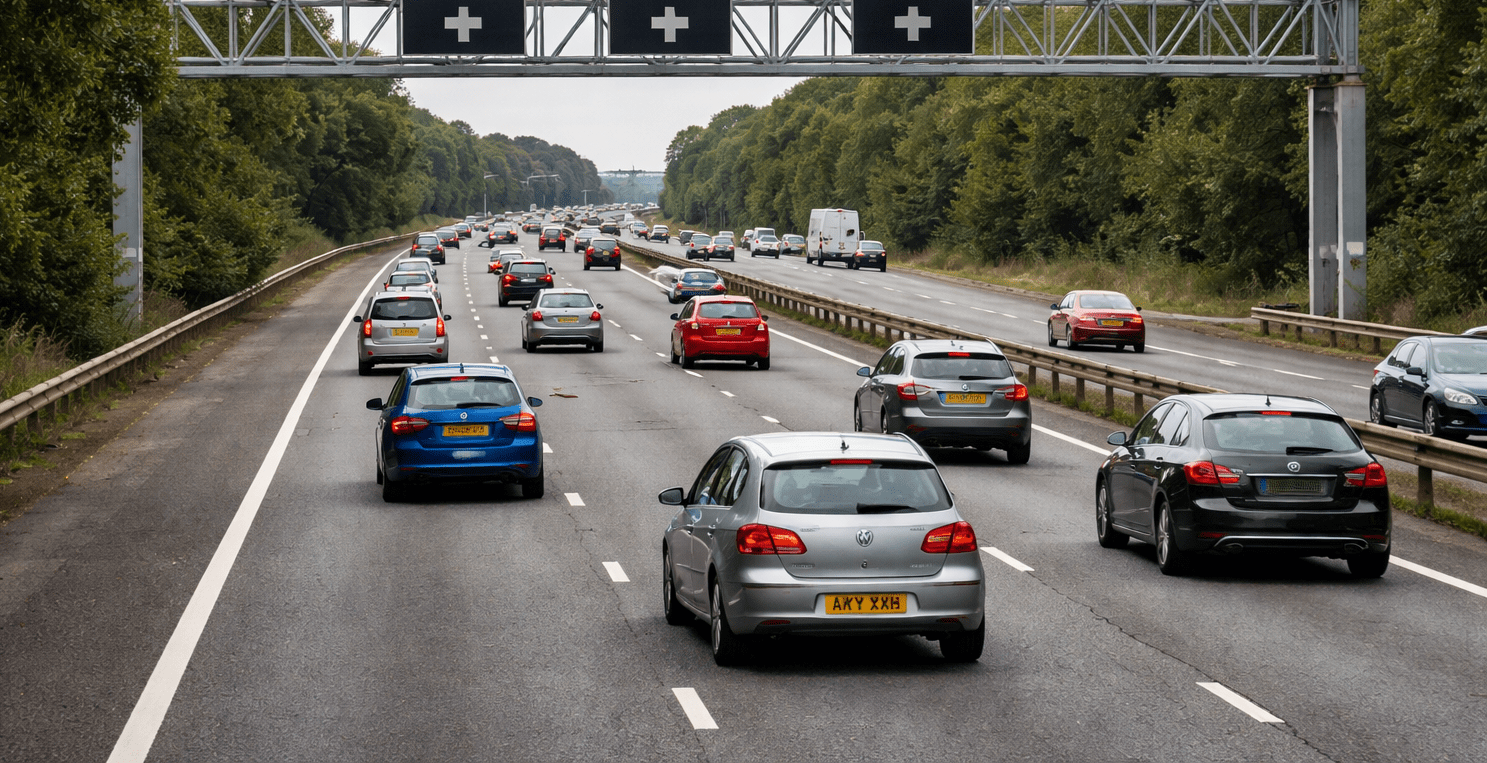
Road travel gives a small but interesting view into human feelings. During a motorway journey of about 65 miles, I carried out a simple observation from the passenger seat to look at the faces of nearby drivers. Drivers were grouped by whether they appeared to be men or women, and by the expression on their faces. The expressions included serious or flat, calm and positive, unbothered, and a special group for those who were singing or dancing while driving. Despite a number of small distractions, including polite conversation with the driver, I was able to observe a total of 72 cars. Among these, 11 drivers, about 15 percent, were singing with clear enjoyment. Twenty five drivers, about 35 percent, looked calm and positive. Twenty nine drivers, about 40 percent, had a serious or slightly cross look. The remaining seven drivers could not be clearly read. Although the observations were subjective, they show that even an ordinary motorway holds many quiet human stories.
Introduction
Everyday places often carry small moments of emotion that we do not usually record. The motorway is one of these places. Many people travel side by side, each inside their own private world, yet their faces sometimes reveal how they feel. This small study asked a simple question. What do drivers’ faces look like when they believe no one is watching?
Methods
This was a real life observational study carried out during one road trip and observations made only when on the motorway. I sat comfortably in the passenger seat. To avoid distraction, I only observed cars on the left side of the motorway. I looked around for short periods of about two minutes at a time during a journey that lasted almost two hours. I wrote down what I saw using paper and pen. Despite my best efforts, and in the middle of gentle conversations with the driver, the final number of clearly observed cars was only 72.
I also tried to record the type of car each person was driving. This effort only went as far as simple colours such as red, blue, and yellow. I soon became confused when faced with the many different shades of silver, which felt impossible to group in a meaningful way. My lack of ability to identify a car’s model or brand by its shape did not help either, so vehicle type was left out of the final analysis.
Drivers were grouped as men or women. Their facial expressions were placed into the following groups:
1. Serious or flat.
2. Calm and positive
3. Singing or dancing while driving.
4. Indeterminate when the feeling could not be clearly understood.
Results
Seventy two cars were observed in total.
There were more men (40) than women (32) driving.
Eleven drivers, about 15 percent, were singing or dancing with clear enjoyment.
Twenty five drivers, about 35 percent, looked calm and positive.
Twenty nine drivers, about 40 percent, had a serious or slightly cross expression.
Seven drivers could not be clearly interpreted because their faces were difficult to read.
A special shout out goes to the truck driver who appeared to be singing a song he knew very well, with the calm confidence of someone who had sung it many times before. Another highlight was the beautiful lady in a white car, who was singing with the full commitment of someone being paid for a karaoke session. Both moments brought a real smile to my face during the journey.
Discussion and Conclusion
These observations show how much quiet emotion exists in ordinary travel. Within a short stretch of road, there was joy, calmness, seriousness, and mystery.
Limitations
Of course, there are limitations. This was only one journey and one observer. There was no random sampling, no formal measurement scale, and no way to confirm what drivers were truly feeling. Judgements depended on brief glances, changing light, moving vehicles, and personal interpretation.
Only drivers on one side of the motorway were observed. Vehicle colour and model were also excluded after early confusion. Because of this, the findings should be read with appropriate humour and caution.